
龙的天空
China blasts Japanese politicians paying respects to Yasukuni war shrine on 81st anniversary of its unconditional surrender_我的网站

A |
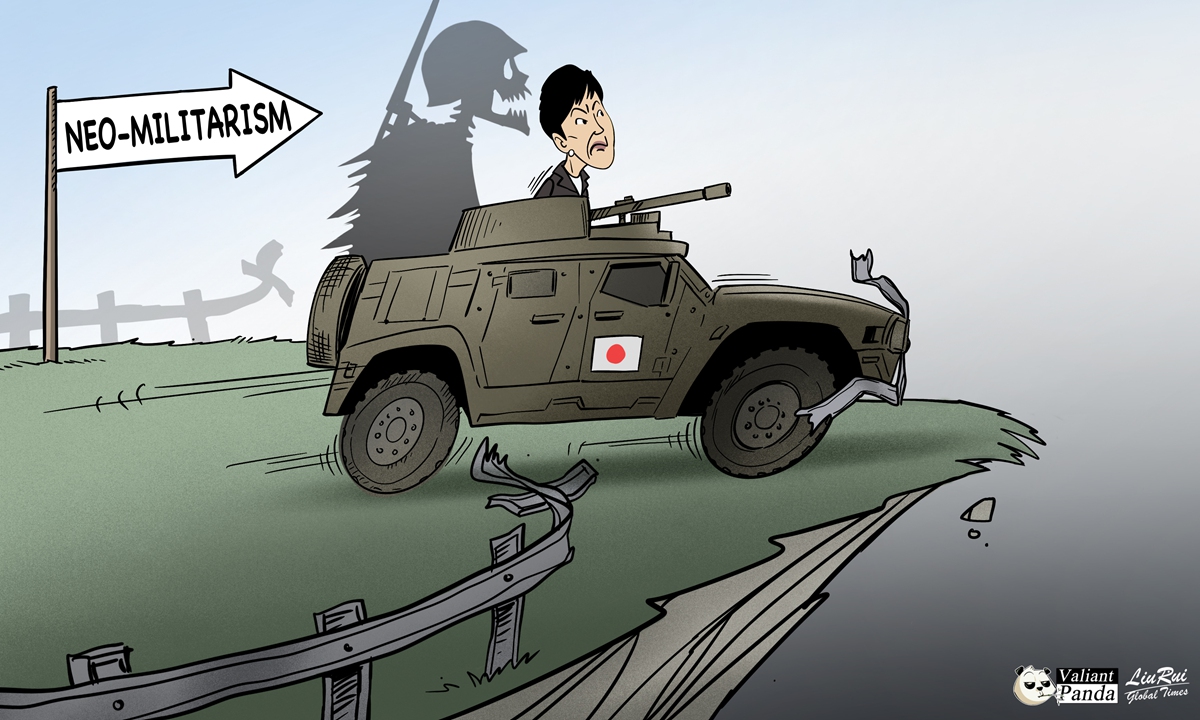
China strongly deplores Japan's negative moves related to the Yasukuni war shrine, and has lodged serious protests against Japan, a Chinese Foreign Ministry (FM) spokesperson said in a statement on Saturday, in response to Japanese politicians paying respects to the Yasukuni war shrine, which honors Class-A war criminals, on the 81st anniversary of Japan's unconditional surrender in World War II.
On such a sensitive day, Japanese Prime Minister Sanae Takaichi sent a ritual offering to the notorious Yasukuni shrine, while Defense Minister Shinjiro Koizumi and several senior executives of the ruling Liberal Democratic Party (LDP) visited in person, prompting Chinese experts to warn that Japan's increasingly brazen moves signal a dangerous shift toward neo-militarism.
Takaichi made a "tamagushi" ritual offering to the notorious shrine using her private funds in her capacity as LDP president, Japan's Kyodo News reported Saturday, citing LDP Secretary-General Shunichi Suzuki. Takaichi did not visit the shrine in person. Koizumi, however, visited the notorious shrine Saturday morning. Hitoshi Kikawada, a member of Takaichi's Cabinet, also visited the shrine.
Meanwhile, Suzuki, LDP General Council Chairperson Haruko Arimura and Election Strategy Committee Chairperson Yasutoshi Nishimura visited the shrine together on Saturday, according to Kyodo News and the Xinhua News Agency.
Japan's Mainichi Shimbun on Saturday described the collective August 15 visit by senior LDP executives as "unusual."
Chinese media including state broadcaster CCTV reported that it marked the first collective visit to the shrine by senior LDP executives.
Yasukuni Shrine, located in central Tokyo's Chiyoda Ward, honors 14 convicted Japanese Class-A war criminals from World War II. It has long been a source of diplomatic friction between Japan and its neighbors. For a long time, visits and ritual offerings made by Japanese officials to the controversial shrine have consistently sparked criticism and opposition both at home and abroad, hurting the feelings of the people of China, South Korea, and other countries and regions victimized by Japan's wartime aggression, according to Xinhua.
An affront to historical justice
"No pretext whatsoever can hide the Japanese politicians' true intention which is to change the verdict on the war criminals, cover up Japan's war crimes, distort the historical facts, and pave the way for accelerating remilitarization. This is an affront to historical justice, a challenge to the foundational norms of civilization, and a provocation against the postwar international order. Such behaviors have been firmly rejected by the overwhelming majority of the international community," the Chinese FM spokesperson's statement said on Saturday.
This year marks the 80th anniversary of the opening of the Tokyo Trials. To view and treat history correctly is an important prerequisite for Japan's postwar return to the international community, the political foundation for Japan's ties with neighboring countries, and more importantly, a key measure for Japan's commitment to peaceful development, the statement noted.
"We urge the Japanese side to do serious soul-searching on its history of aggression, make a clean break with militarism, and earn trust from its Asian neighbors and the rest of the world with concrete actions," the spokesperson said.
Lü Chao, an expert on East Asian studies and a professor at the Liaoning Academy of Social Sciences, told the Global Times on Saturday that attitudes toward the notorious Yasukuni shrine on this very day have long served as an important "touchstone" for the international community to judge whether Japanese political forces genuinely recognize the country's wartime aggression and responsibility.
"What is particularly alarming this year is how openly these political signals are being sent," Lü said. "The combination of an offering by the prime minister, a visit by the sitting defense minister and a coordinated appearance by senior ruling-party executives means the issue can hardly be dismissed merely as individual acts of mourning."
Although Takaichi stayed away in person, Lü said the offering still clearly demonstrated her political attitude. "Not visiting personally does not fundamentally change the political nature of the gesture," Lü said, noting that diplomatic and domestic pressure may have affected the form Takaichi chose, but not necessarily her underlying position.
Particular attention required
"The collective actions of senior figures in the ruling party deserve particular attention," he said. "They raise the question of whether Japan's political establishment has truly developed a correct understanding of its aggression and wartime crimes."
Chinese military affairs expert Song Zhongping told the Global Times on Saturday that visits by Japanese conservative lawmakers and government officials to the notorious shrine are not new and should not be treated as an isolated development unique to the Takaichi administration.
Former prime minister Junichiro Koizumi repeatedly visited the shrine and went there as prime minister on August 15, 2006. Shinzo Abe visited as sitting prime minister in December 2013. Shinjiro Koizumi himself visited on August 15, 2025, when he was agriculture minister.
"The important point is that this tendency has persisted within Japanese right-wing politics for decades," Song said. "What we are seeing now is not its sudden emergence, but its increasingly overt expression."
Song further noted that the political significance of Koizumi's visit is amplified by his current position as defense minister. "A defense minister's understanding of wartime history cannot simply be regarded as a private attitude," he said. "It inevitably leads people to ask what kind of direction Japan's defense policy and Self-Defense Forces may take."
Such concern comes as the Takaichi government pushes to strengthen Japan's military capabilities and pursue constitutional revision.
Song stressed that Japan has already expanded defense spending, developed so-called counterstrike capabilities and eased restrictions on defense equipment transfers under the existing Constitution, meaning constitutional revision should not inaccurately be portrayed as a legal prerequisite for all such measures.
What deserves greater scrutiny, he said, is whether historical revisionism, constitutional revision and military expansion are increasingly reinforcing one another.
"The issue surrounding the notorious Yasukuni Shrine is not simply one of mourning," Song said. "When political forces refuse to squarely confront the history of aggression while simultaneously seeking greater military capabilities and fewer postwar restraints, neighboring countries have every reason to remain vigilant."
。 8月26日吕梁市场炼焦煤线上竞拍价格上涨。截止目前统计到18家成交结果,累计挂牌14.49万吨,成交13.99万吨,流拍率3%。

B | 其中高硫主焦A9.5、S2.5、G80成交价2130元/吨涨220元/吨,高硫瘦焦A8.5、S2.2、G65成交均价1958元/吨涨150元/吨,中硫瘦A10、S1.3、G65成交价2100元/吨涨140元/吨,短期内市场将延续偏强运行态势。(我的钢铁网)。
Current article:http://mll.nengqunzangkouhao.cyou/list_ne3km/qfp374.html
Published on:17:56:31
我的网站相关阅读
- 克莱-汤普森签约消息刚曝出 即现身迈阿密训练场
- 广西宁明县预计今晚全县停电?供电公司辟谣
- 切尔奇:我当年根本不想去西甲,是被都灵驱赶去马竞的
- 越来越多的快递,为何能越送越快?,越来越多的快递,为何能越送越快?
- 父亲参加革命15年杳无音信,儿子寻亲被抓壮丁,抗美援朝意外相逢,乡村大锋,原创 父亲参加革命15年杳无音信,儿子寻亲被抓壮丁,抗美援朝意外相逢
- Qwen3.8预览版上线;Kimi暂停C端新用户订阅,优先保障现有会员 | AI圈又发生什么了
- 金店突发“抢劫案” 天津警方150分钟侦破
- China, Africa deepen cooperation on digital development
- 10 Best Korean Horror Movies: A Tale of Two Sisters and More
我的网站最新文章
- 重庆:聚“新”于心,为青少年健康成长保驾护航
- 2025年618活动时间确定今晚20点全面开启!淘宝京东618最新红包口令都是:优惠礼包855
- 광진구, 민선9기 공약 우선순위 주민에게 묻는다…온라인 설문조사
- Samajwadi Party patriarch Mulayam Singh Yadav passes away
- 红米红米“无畏任何对手的性价比”,肖敏雷军:生与死都是漠不关心的,如果你拒绝接受就做吧。
- 铁林:詹姆斯很自律但他未必像科比一天四练 这是科比的特别之处
- 营利双增,李宁为什么还不能松口气?
- 阿斯:维尼修斯留胡子是要从头开始,就像当年梅西染发
- 新时代文明实践 | 钱清街道开展“与梦想童行”中国梦想日主题活动
- US jobless claims remain at historically low 209K, sign of labor market strength
- Agra News: फोरेंसिक लैब में फर्जी बैनामों की जांच शुरू, जल्द आएगी रिपोर्ट
- 中国女排主教练蔡斌:13场宝贵历练,摸底世界强队
- 俄罗斯又给西方划红线了?泽连斯基首次批评费多罗夫!,作家项鹏飞,原创 俄罗斯又给西方划红线了?泽连斯基首次批评费多罗夫!
我的网站随机推荐
- [图]Windows 11 Beta获更新:任务栏右键菜单新增任务管理器入口
- This is banned in the US but a hot topic in fight over Ohio's abortion amendment
- 普京任命莫尔古洛夫为俄罗斯驻华大使_俄乌冲突200天 俄罗斯损失有多大?_泽连斯基:当前与俄谈判“不可能”
- 铁路为何不开设无陪护儿童服务 相关部门答疑
- 丧葬中心和临终关怀医院又脏又晦气?
- 七旬老人求助鉴出假证 登记部门提醒:房产抵押莫只“押证”
- “40岁”修车摊遇上“19岁”服务队 这个暑假 一茬茬市民因怀揣公益之心闪闪发光
- 《Sea of Remnants》总监公开10分钟独家实机演示,详解游戏隐藏秘密
- 沃特森4年8800万合同 含7.5%交易保证金
- 9月13日0—24时,三亚市无新增确诊病例和无症状感染者
- Out-of-work Chinese actors turn to theme parks as immersive characters after AI squeezes short-drama jobs
- 中国体育圈趋向团结一致,都集体慢慢向中国足球对齐了!
- 【现货】8月26日各地区现货铝价格汇总